
Project Description:
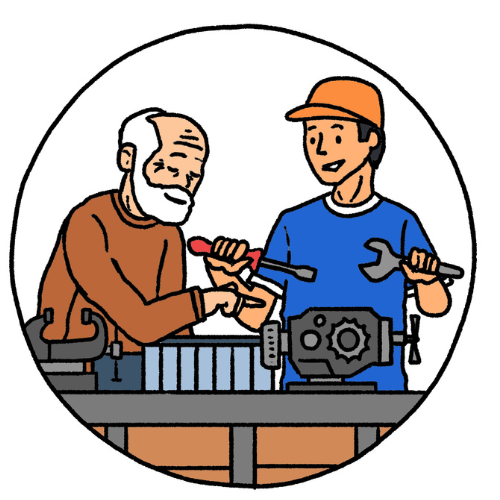
The tradition of repairing and maintaining goods is fading, especially among younger generations. This project seeks to revive repair culture by identifying and mapping the circular skills, such as mending, maintenance, and upcycling, held by elderly individuals. These skills will be documented through structured citizen science activities in which older adults collect and share knowledge within their communities. A collaborative workshop will then help analyse and visualise these skills. To bridge the generational gap, a survey will assess the repair knowledge and needs of younger people, followed by a co-creation workshop bringing both age groups together to explore practical ways to transfer skills and promote circular behaviours. This approach not only supports sustainability by reducing consumption of new resources but also empowers elderly participants to be active contributors to a circular economy. The project advances research on circular behaviours and highlights the value of intergenerational collaboration in building a more sustainable future.
Project Type: Kickstarter
Theme: Resource Management
Mentor:Stefanie Schuerz
Connecting generations through circular skills and shared lived experience
In Nice, France, the inclusive citizen science initiative Intergenerational Circularity brought together seniors aged 65 and over, and young adults aged 18 to 35 to explore the transmission of circular skills.
The project set out to understand how circular skills are learned, how they are used, and how they might be shared across generations. Quickly, it became clear that beyond practical skills, many participants were also seeking opportunities to reconnect.
Community involvement
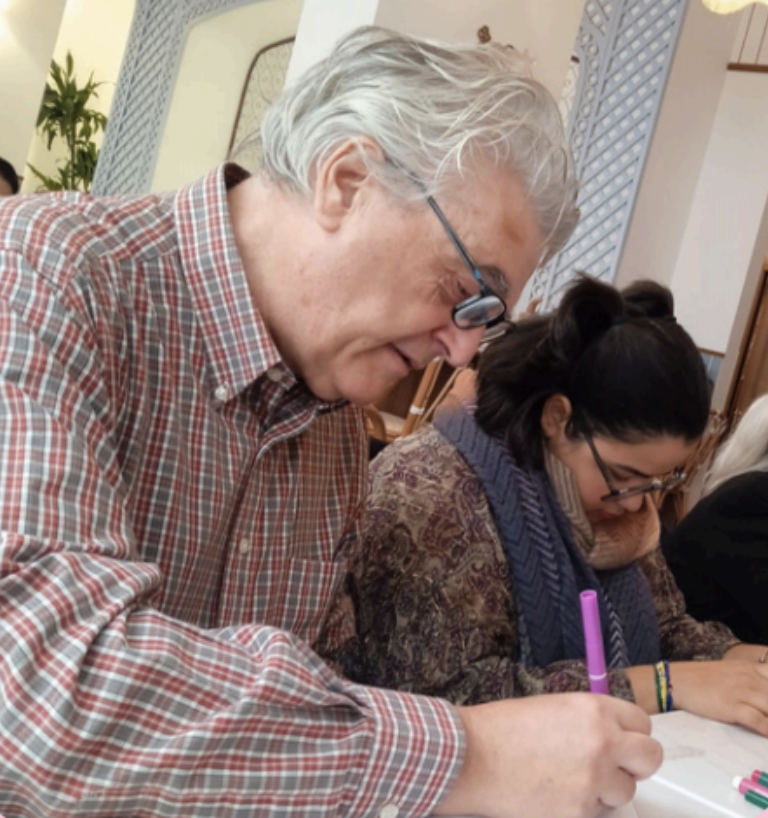
Citizen scientists were recruited through universities, organisations such as Missions Solidaires and the Maison Départementale des Seniors. In total, 17 citizen scientists took part – 9 young adults and 8 older adults, aged 20 to 85. They mobilised their personal networks to distribute two surveys: one for older adults with circular skills, and another for young people interested in learning them.
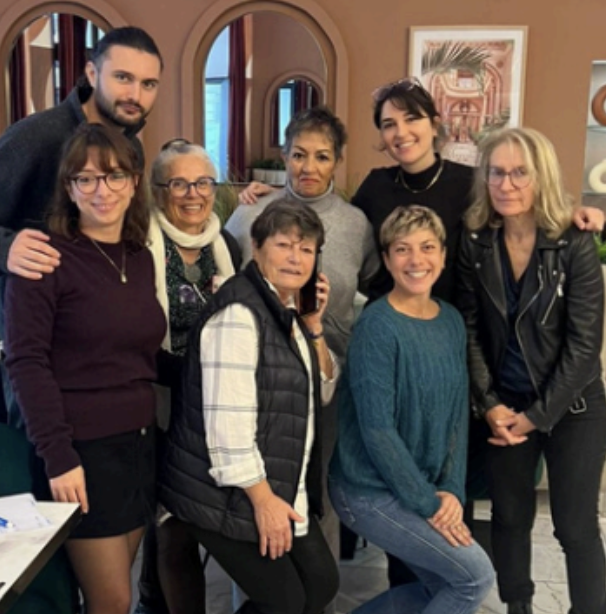
Seniors were mainly surveyed in person, including during an outdoor survey session, while responses from younger citizens were collected online. Surveys were shared in places that naturally foster everyday encounters: university classrooms, cafés, neighbourhood squares, gyms, local events, and through friends and colleagues. This approach helped build trust, accessibility and a sense of ownership among participants.
A closer look at seniors’ circular skills
More than 130 people participated in the survey, split evenly between older and younger respondents. Senior participants, whose average age was 78, reported a broad range of circular skills: sewing, repairing mechanical objects, fixing everyday items, and creatively transforming materials. These abilities were often the result of decades of practice.
35% learned these skills from family members, usually parents or grandparents, while 39% were self-taught, often out of necessity or a desire for independence.
Some women recalled learning sewing at school, when it was considered an essential skill for girls. 23% associated these skills with pleasure and autonomy. A large majority (87%) still use them today; those who do not mainly cited sight or mobility limitations, or a lack of motivation.
A strong desire to learn among younger generations
Younger respondents had an average age of 26. Most reported already repairing clothing or household objects. Their top learning interests were repairing digital devices (46%), everyday objects (41%) and clothing (38%). A large majority (83%) said they would like to learn from seniors, and 77% would also be willing to teach older adults their own skills.
”“People around 24–25 are trying to return to older ways of doing things. When they get to university, it becomes even more important... So the idea that young people don’t care is really a misconception.”
noted Amna, 25, a citizen scientist.
Mapping the conditions for transmission
There is a strong match between the skills seniors have and what young people want to learn, yet transmission is limited. Seniors are willing to teach – but often only if someone asks, or if young people “come to them,” as travelling can be difficult. Both generations independently identified family settings as the most natural place for transmission. Young people appreciated online tutorials, but older adults did not.

Based on this, citizen scientists proposed the following co-created solutions :
- Organise weekly skill-sharing sessions in senior residences, supported by a
small materials budget. - Create an online platform that
connects young people with seniors who can teach them, encouraging in-person learning. - Set up stands and workshops in community spaces – markets, campuses, libraries – to spark spontaneous intergenerational exchanges.
- Promote skill-sharing within families during events like Christmas or birthdays through a national awareness campaign.
Beyond skills: the human connection
Conversations revealed that circular skills were often a gateway to deeper exchange. Seniors shared memories, life lessons and personal stories.
”“Relationships are fading. We communicate more and more, but we talk less and less.”
As one participant, 71, explained.
Their diverse experiences enriched the project: a famous painter who once knew Dalí, a seamstress from opera houses, an artist working with used metal, and people who supported their mothers during wartime. Each had something unique to pass on.
Reflections and next steps
The project showed that:
- Seniors hold essential yet often
undervalued knowledge; - young people are keen to reconnect
with hands-on skills; - intergenerational collaboration can
strengthen social connection.
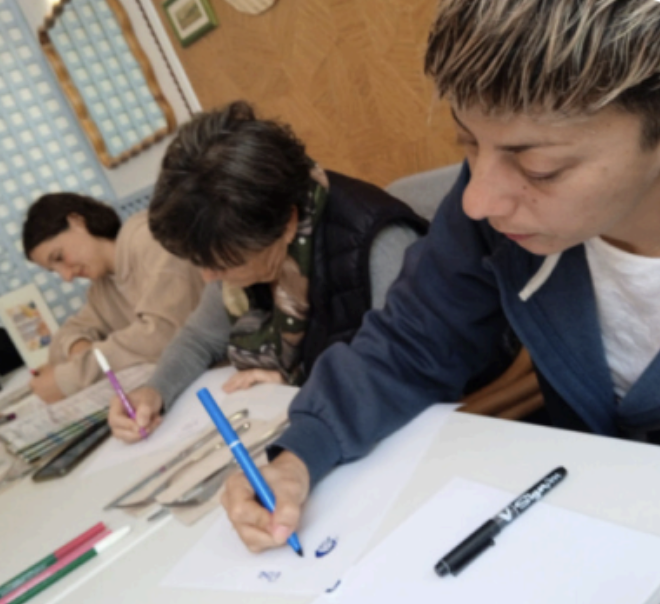
Recommendations from the workshops will be shared with local authorities, associations, and networks across France and Europe. This project was made possible thanks to the Impetus programme and the guidance of Stefanie Schuerz, whose mentoring strengthened citizen participation throughout the process.
”“The surveys and workshops created a friendly atmosphere, sparked new positive ideas, and showed that there’s something worth doing and that we shouldn’t give up—so let’s keep going!”
Michèle, 77
”“I enjoyed taking part in the project because I found it to be inclusive. We were all able to share our views on the tools, the questionnaires and the meeting
Arya, 25
places, but also on the solutions to be
implemented.”