
Project Description:
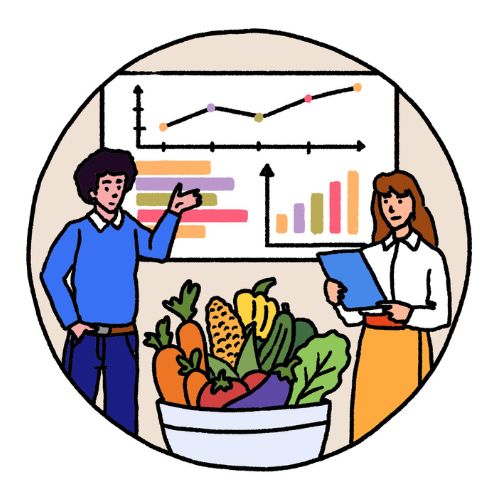
Nourishing Equity: A Youth-Led Citizen Science Initiative Mapping Food Security Across Anatolia (NEYSA) investigates how regional differences affect university students’ access to affordable, nutritious food. Through a participatory model, 90 student citizen scientists across Ankara, İzmir, and Ordu will gather data on dietary habits, food spending, and price fluctuations in university canteens. The project equips students with skills in ethical research, data collection, and analysis while positioning them as active contributors to institutional and national policy conversations. Deliverables include a regional disparities report, policy briefs, an open-access dataset, and public dissemination events. NEYSA centres lived experience as evidence and connects local observations to structural discussions on food access. It aims to make food insecurity visible, actionable, and solvable through youth engagement, data transparency, and multi-stakeholder dialogue.
Project Type: Kick Starting
Theme: Public Trust, Education and Empowerment
Mentor:Jacqueline Goldin
Mapping Student Hunger: The NEYSA Youth-Led Food Security Observatory
NEYSA is a youth-led citizen science initiative coordinated by Middle East Technical University (Ankara), in collaboration with Ege University (İzmir) and Ordu University (Ordu). Our team brings together academic advisors and, most importantly, 90 dedicated university student citizen scientists who are mapping regional inequalities in food accessibility and inflation rates that directly affect students across Türkiye.
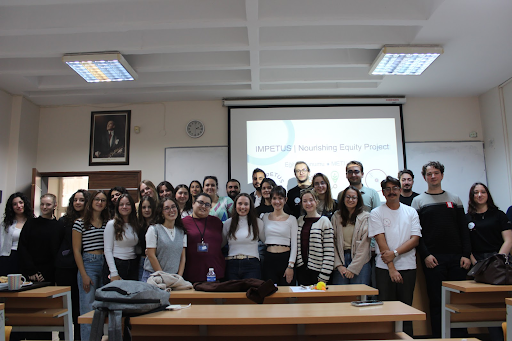
Our journey began with an intensive growth period during the spring and summer, during which we refined our strategies through IMPETUS training. We launched field operations with targeted training sessions for volunteers in Ankara and Ordu (October), followed by İzmir (November). Through a comprehensive curriculum covering data ethics, privacy protection, IMPETUS principles, and key economic concepts related to food inflation and consumption baskets, we transformed 90 volunteers into equipped citizen scientists. This ensured they understood how the data they collect through surveys and price monitoring feeds into the final calculations.
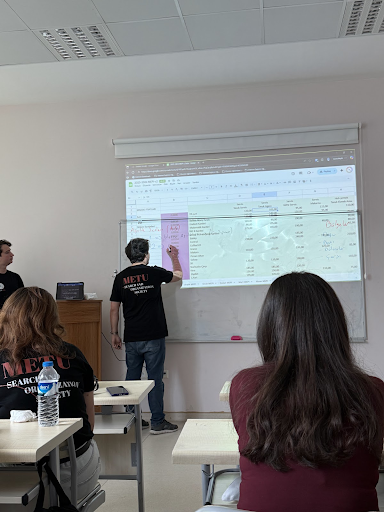
Currently, our citizen scientists are active in the field (October–January), monitoring monthly prices across 120 food businesses (approximately 40 per province). We have already digitised the October data and are currently processing the November findings. At the same time, we launched a comprehensive survey targeting 750 students (about 250 per province) to investigate dietary patterns and consumption habits. Importantly, our survey methodology received official approval from the Human Subjects Ethics Committee, ensuring the highest standards of research integrity.
This work is essential. Amid persistent inflationary pressures, the purchasing power of standard state-funded scholarships (such as those provided by the Higher Education Council – YÖK) no longer meets students’ basic nutritional needs. NEYSA moves beyond anecdotal accounts to generate robust, evidence-based data. By revealing the real cost of living for students across different cities, we aim to make the often-invisible struggle for adequate food both visible and actionable.
Support from IMPETUS and our mentor, Jacqueline Goldin, has been transformative. From the earliest training sessions, the programme catalysed a shift in our thinking—showing us that science is not just a top-down academic endeavour but a grassroots movement. It instilled crucial values of transparency and data ethics while helping us build a bridge among three geographically and culturally diverse universities. Most importantly, it demonstrated the power of data to expose income inequality.
”“I thought the struggle with food costs was just my personal problem. This project showed me it is a systemic issue that we can measure and change together.”
student citizen scientists, Aylin Çoban, reflected
Looking ahead, once data collection concludes in January, we will release a comparative report detailing four-month inflation trends and regional dietary disparities. We will use these findings to advocate for concrete policy reforms with key decision-makers, including the Council of Higher Education (YÖK) and major metropolitan municipalities, calling for financial support systems that reflect the actual cost of living for students.