
Project Description:
We are a group of science communicators who have observed that many of us tend to believe in folk wisdom or outdated beliefs that influence our daily choices, often without understanding their validity. Our curiosity about the truth behind these beliefs has led us down an intriguing path. We realised we need the assistance of intergenerational citizen scientists to help us differentiate between fiction and facts. As we began our investigation, we discovered that we often prefer to accept fabricated ideas that resonate with our values, family, and community traditions rather than adhere to factual information. While we suspect some folk wisdom may hold, we also recognise numerous misconceptions. Therefore, this summer, we aim to collect as many folk wisdoms as possible and assemble a team of intergenerational citizen scientists to help us distinguish fact from fiction. Together with these citizen scientists, we will co-create a tool designed to fact-check and collaboratively investigate selected wisdoms. Join us on this exciting exploratory journey!
Project Type: Kick-Starter
Theme: Public Trust, Education and Empowerment
Mentor: Patricia Barciela
Sorting Fact from Fiction: A Citizen Science Study of Folk Wisdom and Modern Myths
In today’s world, we are constantly flooded with information, much of it misleading or false. Few of us have the time to fact-check everything we encounter, so we rely on personal judgment and trust networks to decide what to believe. In our project, we explored how multigenerational citizen scientists distinguish fact from fiction in deeply rooted folk wisdoms and contemporary social media trends related to health, food and the environment.
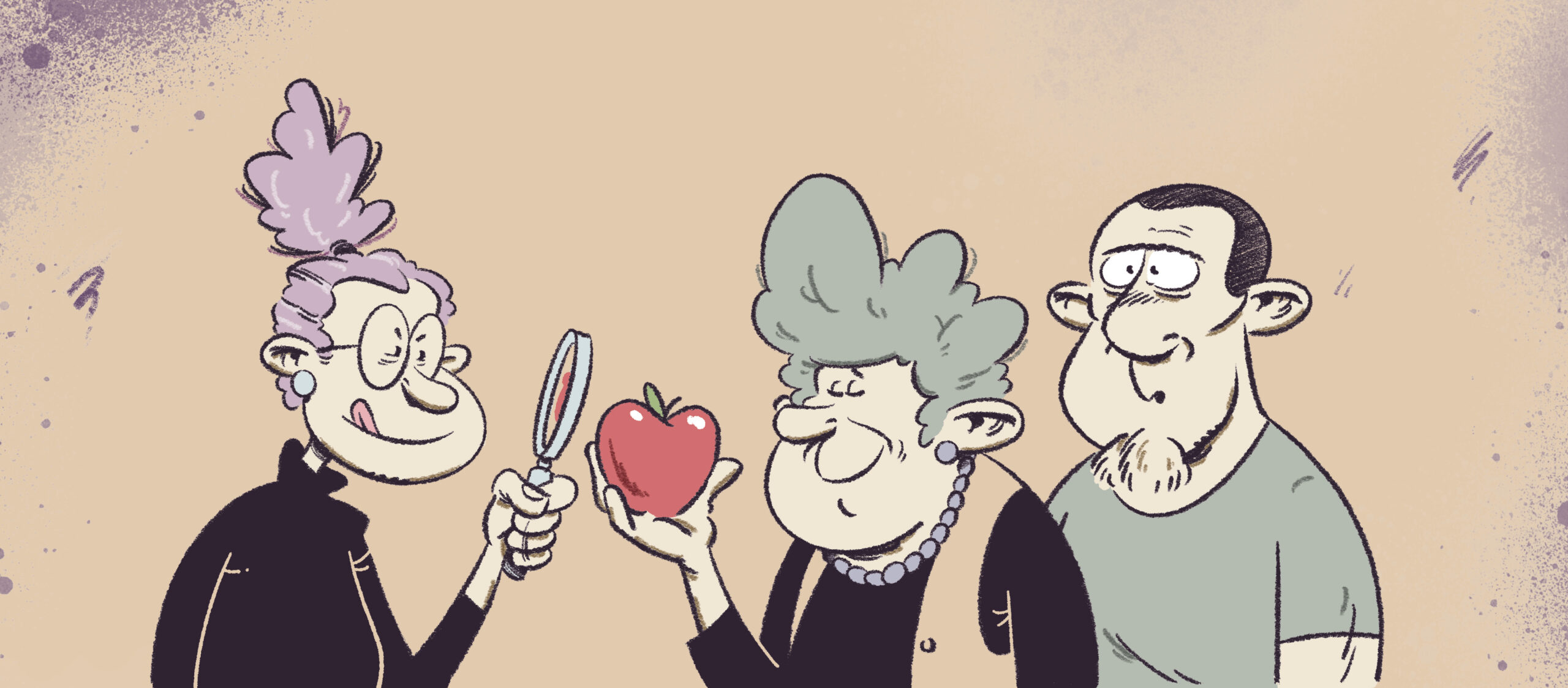
Our team consists of a science communicator, two journalists with fact-checking expertise and an illustrator. At the beginning, we struggled to identify even ten folk sayings and claims to examine. We needed a large group of citizen scientists to help us collect more. Over the summer, more than 180 citizen scientists contributed through activities held in three libraries, online and on the streets of Ljubljana. Together, we gathered 369 folk wisdoms and trending claims.
In the autumn, we collaborated with more than 30 multigenerational citizen scientists during six workshops in libraries across Ljubljana and Kranj. Together, we explored how participants receive information, how they interpret it, when they trust it, and when they choose to verify or share it.
Citizen scientists told us they primarily trust people close to them, such as friends and family members. Much of the information shared in these networks originates from traditional or social media. Participants reported being exposed to fake news multiple times a day, yet most admitted they rarely fact-check information because the process takes too much time. Some expressed scepticism toward institutional sources, questioning whether political or commercial interests might influence public health organisations or corporations.
In the second round of workshops, we examined fact-checking methods in order to develop a practical and easy-to-use tool for checking information in daily life. The results of this work will be presented in comic form.
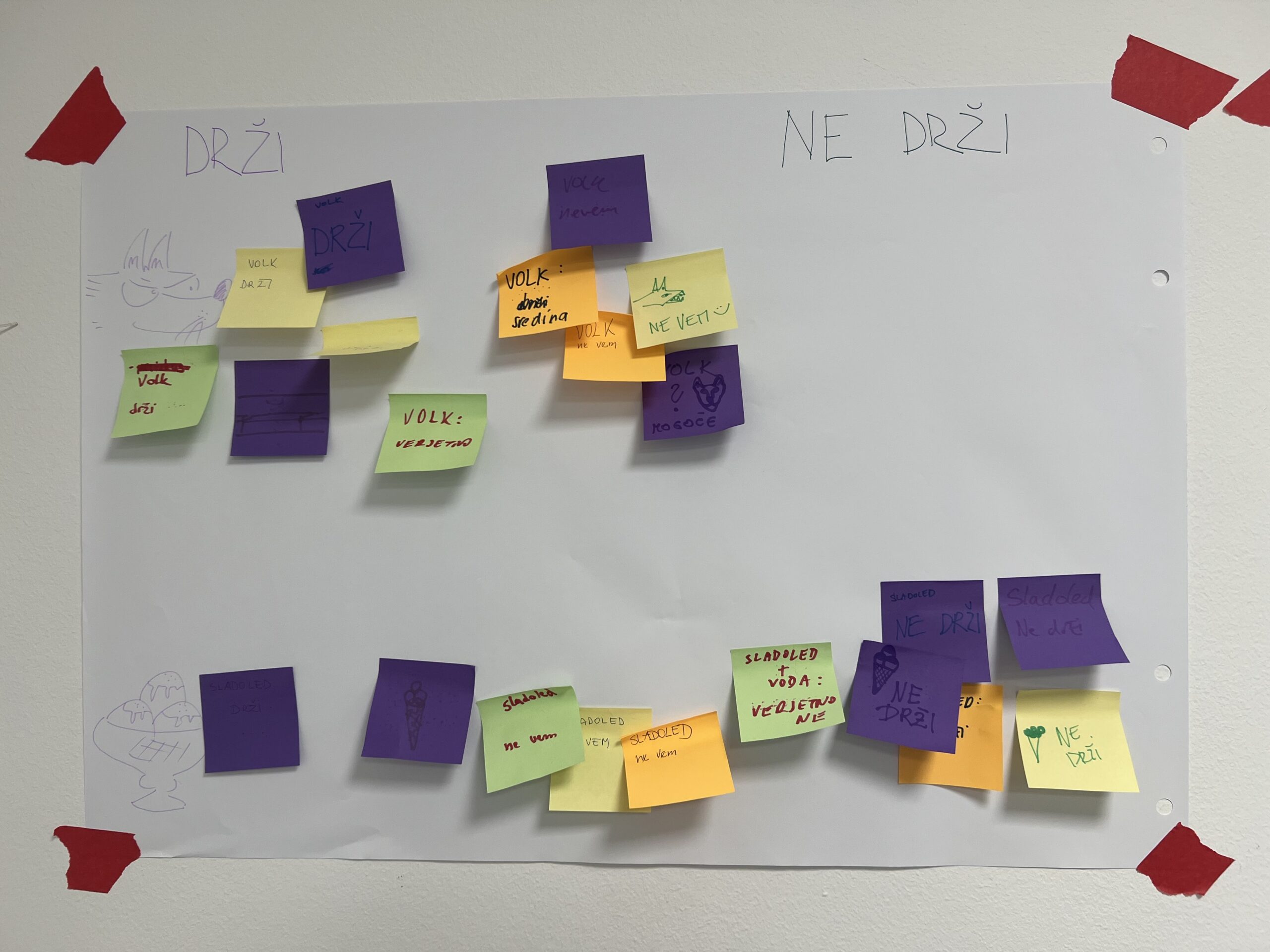
Citizen scientists began by examining folk wisdoms using a variety of approaches. Some suggested small experiments to test specific claims, while others relied on sources they considered trustworthy. To our surprise, many participants, both younger and older, used AI tools to assess whether a folk saying contained any truth. The use of AI for fact-checking appeared across generations. At our final events, we will explore how information has travelled and changed over time, from the sayings of older generations to the outputs of digital bots.
This project would not have been possible without the support of the IMPETUS Accelerator. Their mentoring helped us refine our methodology and encouraged us to explore unfamiliar areas. It was extremely valuable to connect with and learn from other research teams throughout the bootcamp and during regular meetings. We truly felt part of a wider citizen science community. We hope to continue exploring the boundary between facts and fiction in the future.