
Project Description:
Citizen Academy İzmir is a participatory governance initiative that leverages citizen science methodologies to enhance public trust, transparency, and accountability in urban decision-making. Targeting youth, women, migrants, and low-income groups, the project selects participants through a lottery-based system and trains them in urban monitoring, participatory auditing, and data literacy. Participants collect data on air quality, noise, waste, and accessibility, which is then used to produce dashboards, audit reports, and policy briefs in collaboration with municipalities. By turning residents into civic data producers and policy contributors, the project bridges the gap between citizens and local authorities. All outputs are open-access and ethically managed, aligning with GDPR standards. Through this model, the Citizen Academy fosters inclusive democratic participation and offers a scalable framework for other cities.
Project Type: Kick Starter
Theme: Resource Management
Mentor: Gefion Thuermer

Urban Detectives: Strengthening Local Democracy Through Citizen Science in İzmir
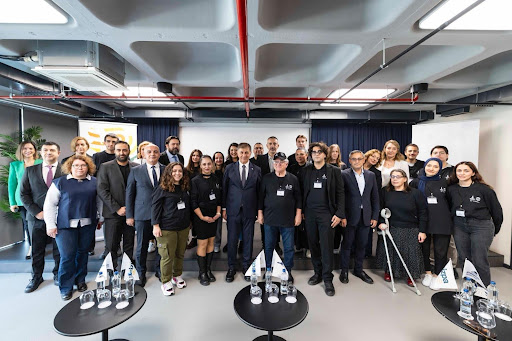
Opening Ceremony of the Urban Detectives Training Program, with the participation of the Urban Auditors and the Mayor of Izmir Metropolitan Municipality, Dr. Cemil Tugay, Photo credit: İzmir Metropolitan Municipality
The İzmir Citizen Academy: Urban Detectives Program is a citizen science initiative designed to strengthen public trust, transparency, and accountability in local government. Developed in collaboration with the İzmir Metropolitan Municipality, the İzmir Planning Agency, and an academic team specialising in participatory governance, the project integrates citizen-led observations and data collection into daily urban management.
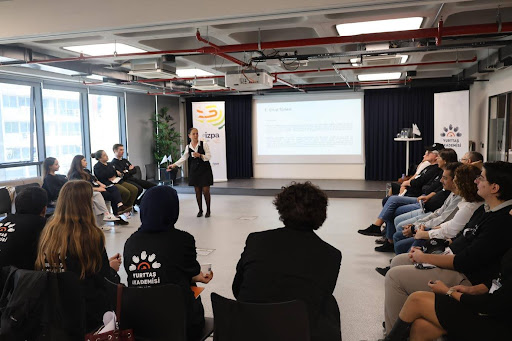
Urban Detectives receiving theoretical training, Photo credit: İzmir Metropolitan Municipality
The program began with an open call and received 2,911 applications, demonstrating strong public interest in contributing to local decision-making. Based on a transparent selection process and official oversight by a notary public, participants were shortlisted. After follow-up phone calls and interviews, 17 participants agreed to serve as Urban Detectives and joined the program.
All selected participants received comprehensive theoretical and practical training on scientific literacy, participatory auditing, ethical data practices, communication, and key legal frameworks—including Municipal Regulations and Prohibitions and the Law on Violations—as part of the Citizen Academy İzmir curriculum. This training equipped citizens to produce systematic, comparable, and policy-relevant data to support municipal services.
All selected participants received comprehensive theoretical and practical training in scientific literacy, participatory auditing, ethical data practices, communication, and key legal frameworks, including Municipal Regulations and Prohibitions and the Law on Violations, as part of the Citizen Academy Izmir program. The training enabled citizens to produce systematic, comparable, and policy-oriented data to support municipal services. Having successfully completed the training program, the City Inspectors conducted structured fieldwork at five pilot public space locations: Kordon, Kültürpark, Hasanağa Garden, İnciraltı Urban Forest, and Bostanlı between November 3 and 28, 2025. Working four days a week, the team used project-branded equipment, body cameras, and coordination groups to generate real-time urban data on issues.
They collected a total of 296 observations: 105 records under Municipal Bylaws and Prohibitions, 108 records under the Law on Violations, 33 citizen-generated suggestions, and 50 general assessments. Each observation included photos, videos, geolocation data, and detailed descriptions, enabling accurate classification and follow-up by municipal teams. The collected data highlighted recurring patterns related to urban governance. Public space occupation has become a frequent problem, particularly along the coastline and in high-traffic areas, alongside cleanliness concerns, broken pavements, limited signage, and minor security risks. The fieldwork also addressed positive aspects, including improving green space maintenance, upgrading playgrounds, restoring Kültürpark entrances, and placing greater emphasis on public space infrastructure. The findings demonstrated the unique value of citizen science not only in identifying problems but also in documenting progress and supporting continuous improvement.
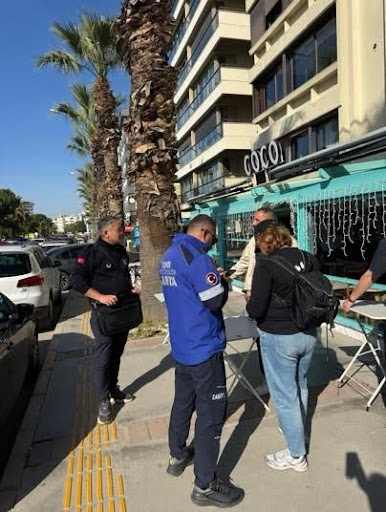
Urban Detectives collecting urban data, Photo credit: İzmir Metropolitan Municipality

Urban Detectives collecting urban data, Photo credit: İzmir Metropolitan Municipality
IMPETUS support was instrumental in transitioning the Urban Detectives program from a conceptual framework to an operational model. The program provided mentorship, methodological refinement, and a European peer network working at the intersection of citizen science and governance. Contributions strengthened the project’s ethical approach, data management processes, and participatory mechanisms, ensuring the pilot was both scientifically sound and institutionally meaningful.
The İzmir Citizen Academy aims to expand the model to additional districts and institutionalise the role of the Urban Detectives in municipal processes. The outputs include an open-access handbook, publicly available data stories, and a replication framework that other European cities can adapt. In the long term, the project aims to establish a sustainable citizen-led monitoring system that increases transparency, supports evidence-based decision-making, and fosters an inclusive culture of shared responsibility in urban governance. The İzmir Citizen Academy demonstrates that when residents actively contribute to urban knowledge, local governments gain a clearer, more robust understanding of daily challenges and become more engaged, informed, and empowered.