
Project Description:
The citizen science initiative Heat Watchers in Action focuses on the unique experiences of extreme heat faced by vulnerable urban households with children by engaging them as citizen scientists to monitor indoor heat and co-create urban adaptation.
During the first edition, we engaged a hundred children from the metropolis of Barcelona as heat watchers and 200 stakeholders in capacity-building and outreach activities. We expect to maximise the replication potential and impact by leveraging this initial experience. Specifically, we plan to involve more schools and improve the methodology by expanding citizen scientists’ engagement to dissemination and the monitoring campaigns to schools; ensure long-term sustainability of the initiative by supporting its integration into public programs and by improving autonomous replicability; and upscale the project to other heat-vulnerable communities.
Our ultimate goal is to accelerate and enable equitable and child-oriented adaptation to climate change, contribute to disaster risk reduction and energy poverty alleviation, increase science literacy and trust in science, and generate innovative, participatory, and policy-oriented research.
Project Type: Sustaining
Theme:Disaster Resilience
Mentor: Karen Soacha

Voices of the Young Against Heat: Heat Watchers in Action
Heat Watchers in Action is a citizen science initiative focused on understanding the unique experiences of children with extreme heat. The project aims to support child-sensitive climate-adaptation strategies. During the first edition, launched in the summer of 2024 in metropolitan Barcelona, we engaged 100 children as “heat watchers” and 200 stakeholders in capacity-building and outreach activities. These young participants were trained to monitor indoor thermal comfort in their homes using sensors and innovative “Heat Diaries.” They also contributed to the co-interpretation of results and the co-creation of adaptation solutions. With support from the IMPETUS Sustaining Grant, we have used this initial experience to maximise the initiative’s impact and replication potential.
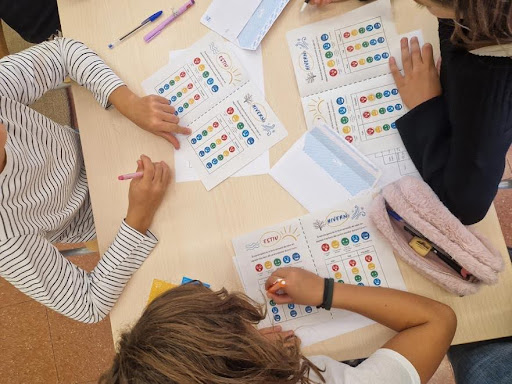
Figure 1. Heat Watchers in Action 2025 workshops at schools.
In this second edition, we involved more schools. We strengthened the methodology by expanding citizen-scientist participation in dissemination activities and extending the monitoring campaigns to schools and households. To ensure long-term sustainability, we supported the integration of Heat Watchers into public programmes and developed autonomous replication tools and processes. These efforts will help scale the project to other heat-vulnerable communities.
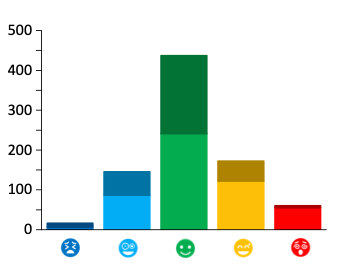
Figure 2. Children’s thermal comfort perceptions noted in the Heat Diary (dark shaded data comes from the second edition).
This second edition engaged 47 students aged 10–13 from two schools located in different neighbourhoods of Barcelona, selected based on climate-vulnerability and socio-economic criteria. Recruitment was supported by the Citizen Science Office (OCCB) of the Barcelona City Council through its “Citizen Science in Schools” programme.
Students participated in three scientific research activities:
-
Thermal-comfort monitoring
Citizen scientists collected data on perceived and measured thermal comfort inside their homes and schools, following training delivered during school workshops. These data were combined with the first-edition dataset to deepen understanding of how children perceive heat.
(See Figure 2.)
During the campaigns, children also shared their personal strategies for coping with heat at home, at school, and outdoors. At home, they reported using fans, taking extra showers, and drinking more water. Outdoors, they sought shade, visited public fountains or swimming pools, used hand fans, and drank water frequently. At school, they cooled off by opening windows, using fans, drinking water, or wetting parts of their body. They also shared playground strategies such as avoiding strenuous sports and seeking shade.
(See Figure 3.)
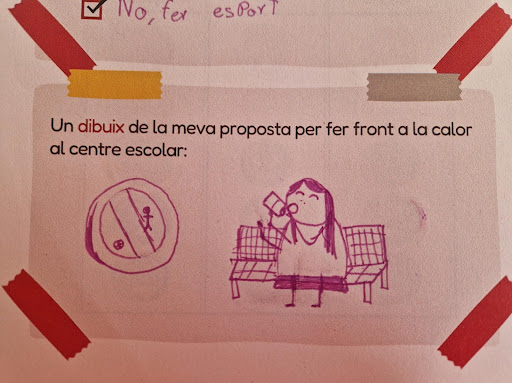
Figure 3. Practices to cope with heat reported during the new schools monitoring campaigns.
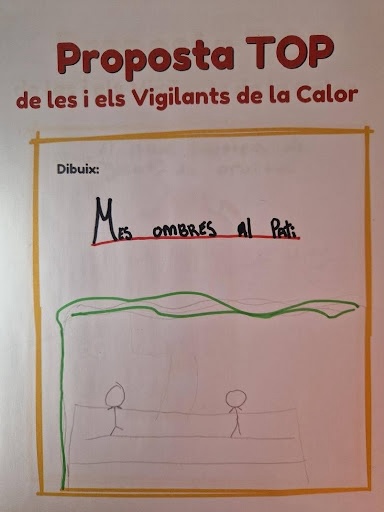
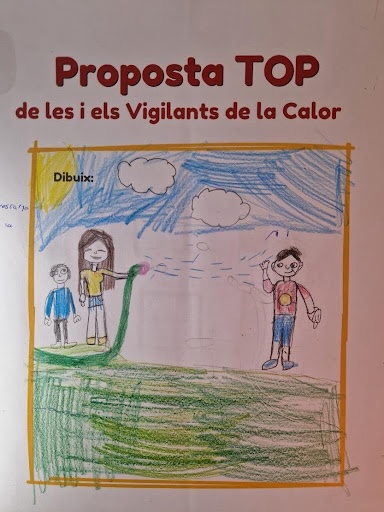
Figure 4. Solutions co-created by children to address heat in the school playground.
-
Co-interpretation of data and co-creation of solutions
Students analysed the findings and proposed solutions for managing heat in various settings. Some proposals echoed ideas from the first edition—such as more shaded areas, healthy ice creams, and additional cooling points—while others introduced new creative concepts, including breathable clothing, “cool mattresses” for “icy dreams,” and playful “air guns.” For schools, children suggested outdoor water games and more shaded playground spaces.
(See Figure 4.)
3. Dissemination and communication
Young participants were invited to help disseminate the research by sharing their experiences in a participatory video. By offering their own voices, they help explain the project first-hand, making science more relatable and inspiring other communities to take action. We will continue involving them in outreach efforts, reinforcing their role as ambassadors for climate adaptation.
Expanding Horizons: Bringing Heat Watchers to Heat-Vulnerable Communities
Thanks to a recent award, we have acquired 100 new sensors to support replication. We are also updating and improving all project materials through our Zenodo community. These resources have already enabled new initiatives: for example, a secondary school in Reus (Tarragona) autonomously replicated the project with our support. In metropolitan Barcelona, the metropolitan government (AMB) has begun offering Heat Watchers as a Service-Learning project, involving one primary and one secondary school. At least two further schools are committed to participating in the 2025–2026 school year.
While inspired by the original methodology, the Service-Learning approach goes further by generating community-focused services and accelerating local solutions proposed by children and teenagers. We have shared these experiences at events such as the P.O.N.T. Erasmus+ exchange between Barcelona and Paris and the Catalan Congress of Citizen Science.
Finally, we are developing a practical replication guide. These steps demonstrate that Heat Watchers in Action is no longer just a project—it is a growing initiative, ready to inspire and empower heat-vulnerable communities worldwide.