
Project Description:
HHFL is a pioneering initiative in Kyiv, Ukraine, dedicated to exploring fungi-based building materials for sustainable reconstruction. Over the seven-month period, the activities will be centred on a mycology lab at the Kyiv National University of Construction and Architecture campus. They will engage local stakeholders in the research, development, and outreach process. This lab will train local volunteers using expertise from TU Berlin. The study will focus on developing fibreglass-based insulation bricks that incorporate waste debris, optimise material properties, and test their safety and asbestos-neutralising potential. To answer the question: How could sustainable building and art practices aid Ukraine’s reconstruction while providing a model for circular communities of the future?—we will engage local bio hubs, university students, and other local community groups, and create our “mycelium network” to turn devastation into sustainable reconstruction, using biomaterials to rebuild with zero CO₂ emissions and reduce hazardous waste.
Project Type: Kickstarter
Theme: Resource Management
Mentor:Andrea Giraldo Sevilla
HOPE HOME • Fungi Lab: Citizen Science for Sustainable Reconstruction
HOPE HOME • Fungi Lab is a citizen science initiative based in Kyiv, Ukraine, dedicated to researching building materials made from fungal mycelium for the sustainable reconstruction of Ukraine.
The urgent need for reconstruction nationwide creates a unique opportunity to test innovative, sustainable construction methods, not only in laboratory settings but also through real-world experimentation.
Why fungi
Fungi attracted the team’s attention not only as a potential zero-CO₂ construction material, but also as a way to reduce hazardous waste generated during demolition and reconstruction. Traditional mycelium composites are typically produced using plant-based waste. HOPE HOME • Fungi Lab is exploring whether building debris can be incorporated into mycelium-based insulation blocks with properties similar to those of styrofoam.
Demolition waste often contaminates surrounding areas with asbestos. Certain fungi can support remediation, making mycelium a promising tool for reducing waste and emissions associated with reconstruction. In this way, fungi may play a key role in addressing environmental challenges related to post-war reconstruction.
An open laboratory and research community
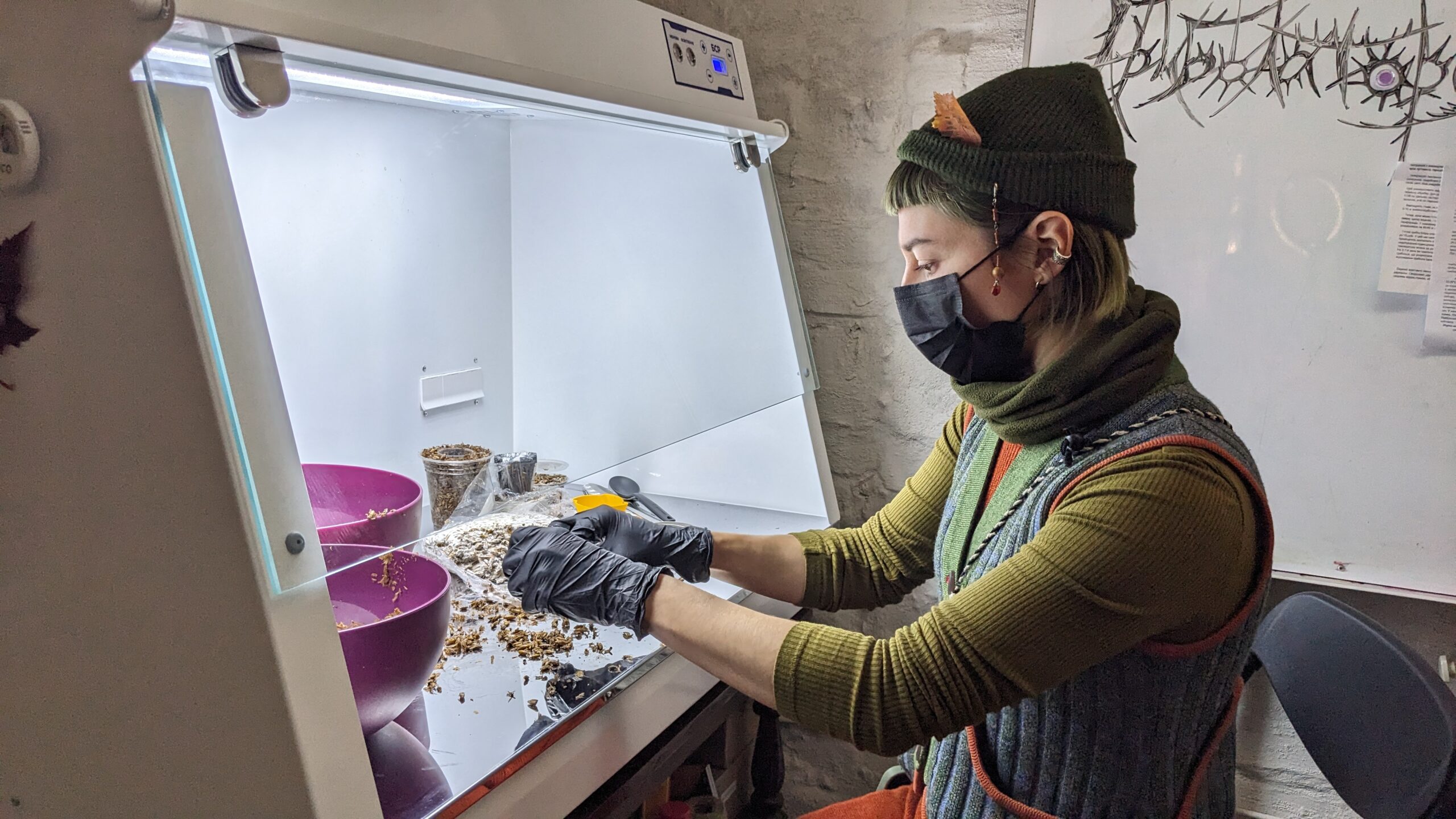
The laboratory is located at Kyiv National University of Construction and Architecture, within the interdisciplinary makerspace Ostriv Platform. It is an open space for experimentation and shared learning that brings together architects, scientists, artists and activists. Within this environment, the team explores both scientific and artistic approaches to post-war reconstruction.
Participation in the IMPETUS Accelerator shifted the project’s focus. Rather than concentrating solely on material development, the team began by building an engaged research community around the lab. Involving people from different disciplines increases the chances of success, as each participant contributes unique skills, perspectives and even mistakes. This diversity is seen as a driver of discovery.
”“It’s a versatile material. You can make something styrofoam like or leather like from mycelium. There is lots of room for experiments and discoveries here. For example, our lab mate Maryna started growing fungi on old books in the Russian language. There is no use for them now anyway.”
As Kateryna Krolenko, Citizen Science Initiative Manager and Fungi Lab Coordinator, explains.
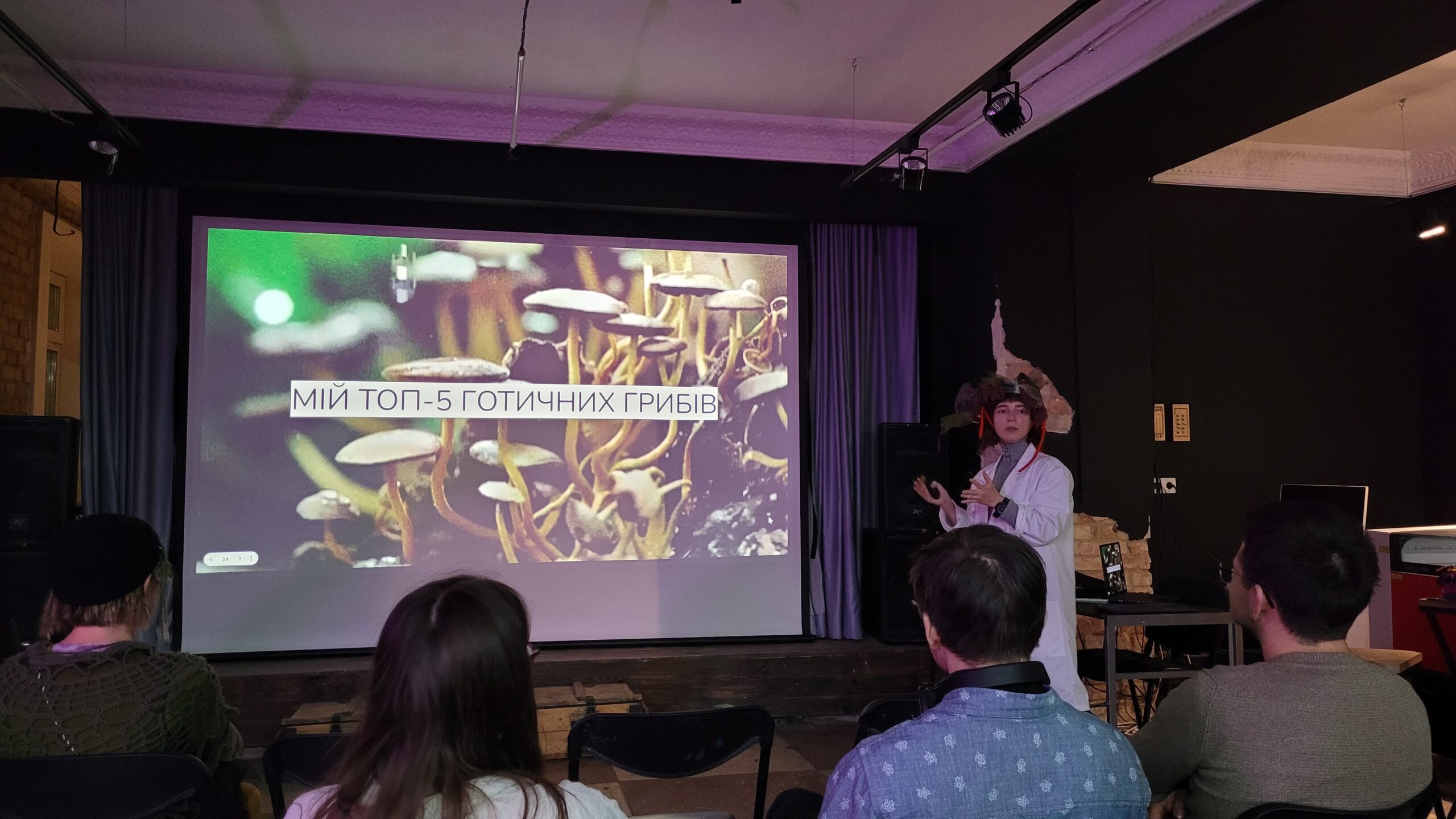
”“Mycelium is very independent. You just create the right conditions and it figures out everything else. In a sense, the fungus itself is our co author.”
Maryna Shchehelska, Fungi Lab Assistant and interdisciplinary artist, adds.
Co-designing with fungi and people.
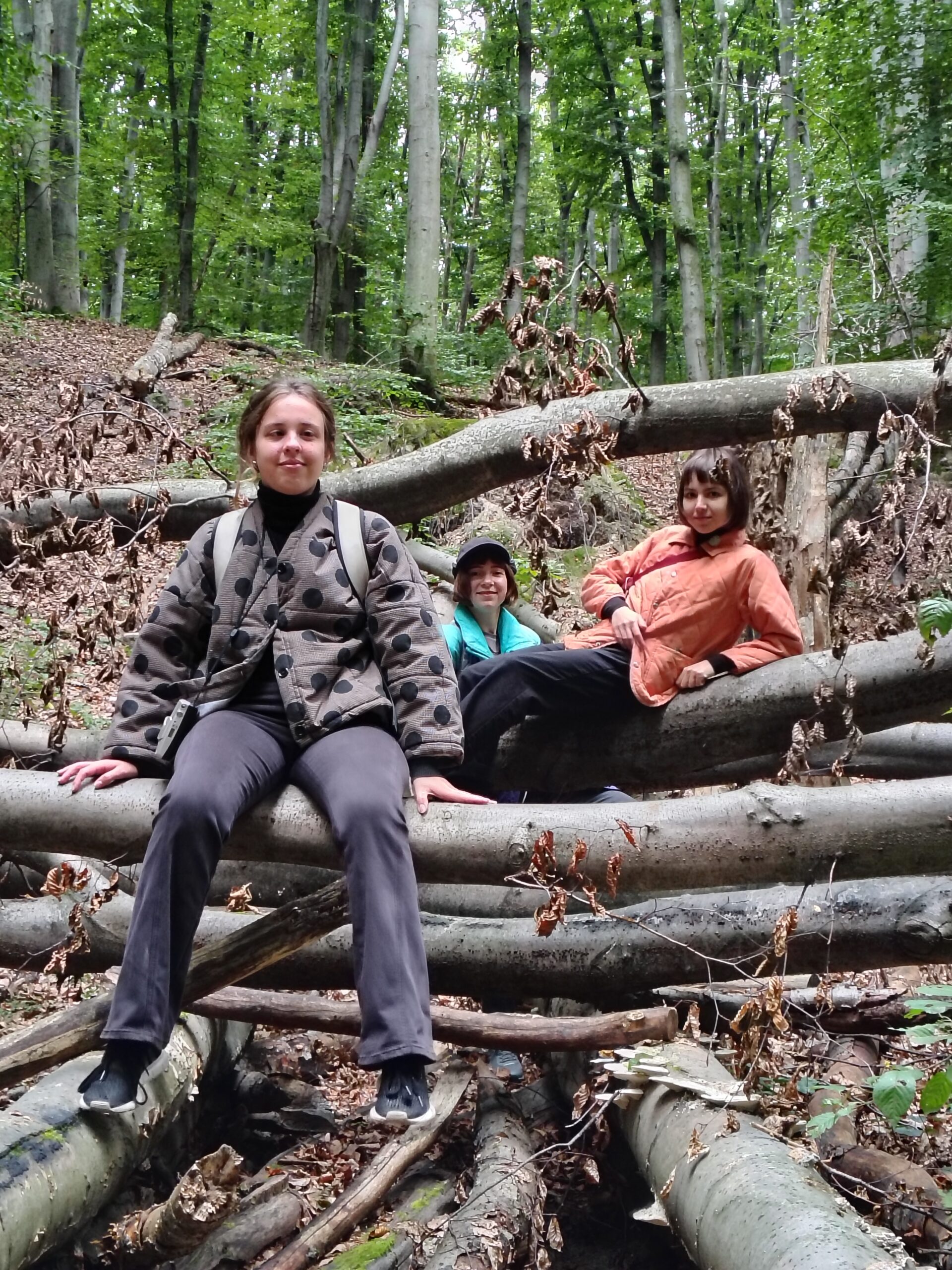
Like fungi themselves, the project is co-designed with its community. Participants are often recruited through informal events such as lecture walks, swamp tours, or kvas-brewing workshops. The launch of a practical course on fungal biodesign further increased activity and engagement in the lab.
The project approaches biodesign in its broadest sense, remaining open to other biomaterials and creative solutions suited to a world shaped by war and global warming. Ukraine is already confronting environmental and social challenges that many other regions have yet to face. HOPE HOME • Fungi Lab aims to share its experience with communities in Ukraine and beyond, supporting resilience and innovation during crises.
Fungi are ready to collaborate. The question is whether we are prepared to collaborate with them.