
Project Description:
According to the World Health Organisation (WHO), worldwide, about 10% of pregnant women experience mental health problems, and this is higher in developing countries, i.e. 15.6%. Anxiety and depression are the most frequent mental disorders. It is crucial to promote psychosocial well-being, as well as the prevention and promotion of mental disorders in mothers during pregnancy. The objective of the project is to evolve the MENINA citizen science project (funded as a kick-starting project by the 1st IMPETUS call) and, based on the new research-based knowledge produced as well as the main pain points identified regarding perinatal mental health, we will co-create new solutions for improving the mental health and well-being of pregnant women. To do so, the MENINALab will be created, where citizen scientists (pregnant women, women who have given birth in the last three years, and their families) and healthcare professionals will co-create new solutions through a design thinking process. The team comprises gynaecologists, midwives, psychologists, research support staff, and citizen scientists. We expect to demonstrate that the implementation of a citizen science process using design thinking methods (MENINALab) is a powerful and helpful tool to generate new solutions based on the real stakeholders’ unmet needs to improve mental health status and well-being during pregnancy, as well as to consolidate a new instrument for co-creation between citizens and healthcare services.
Project Type: Sustaining
Theme: Inclusion
Mentor:Chistiane Grill

MENINA4Sustain: co-creating new solutions for improving mental health and wellbeing during pregnancy by a citizen science approach
- MENINALab has generated nine new solutions to improve mental health and well-being during pregnancy.
- The implementation of a citizen science process using design thinking methods is a powerful tool to generate new solutions based on real stakeholders’ unmet needs
The project
MENINA4Sustain is a citizen science initiative focused on generating new solutions to support mental health and wellbeing during pregnancy. The project is a Sustaining initiative funded through the third IMPETUS call and builds directly on the main pain points identified during the original MENINA Kickstarting project.
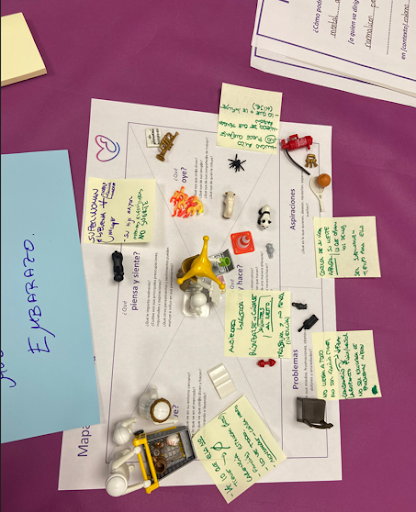
At the heart of MENINA4Sustain is the MENINA Lab, an experimentation and co-creation space where citizen scientists and healthcare professionals work together using a design thinking approach. Citizen scientists include pregnant women, women who have given birth in the past three years, and their families. Obstetricians and midwives participate alongside them, ensuring that lived experience and clinical knowledge are combined from the outset.
The problem
Pregnancy is a significant life stage associated with physical, emotional and social changes that can significantly affect mental health and wellbeing. Maternal mental health during pregnancy is a critical public health issue, as this period strongly influences long-term health outcomes for both parents and children.
According to the World Health Organization, around 10 percent of pregnant women worldwide experience mental health problems, rising to 15.6 percent in developing countries. Anxiety and depression are the most common conditions. These figures highlight the importance of promoting psychosocial wellbeing, preventing mental health disorders and strengthening support systems for mothers during pregnancy.
What we did
A targeted engagement campaign was designed to involve citizen scientists in MENINALab activities. The active involvement of healthcare professionals, particularly obstetricians and midwives, was essential to reaching pregnant women and expanding the initiative’s reach. Collaboration with local breastfeeding associations further supported outreach and participation.
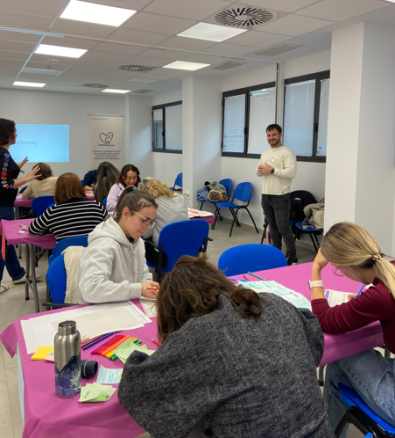
The MENINALab was hosted at a Primary Care Centre in one of the Healthcare Department’s municipalities. Three sessions were held in December, on the 4th, 10th and 18th, each running from 4 p.m. to 7 p.m. To ensure accessibility, a kindergarten service was provided during the sessions, which participants highly appreciated.
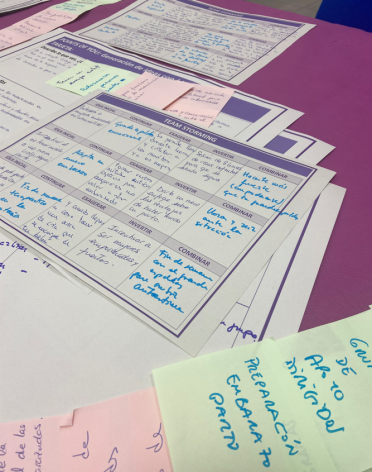
MENINALab activities followed a structured design thinking process. Participants were divided into three teams to ideate solutions addressing the challenges identified during the first MENINA project. More than 25 women participated in the lab, collaborating to ideate and prototype new ideas. In total, nine solution concepts were developed during the citizen science laboratory.
The MENINA4Sustain final event will take place on 15 January. Each team will present its ideas and receive feedback from the audience, including healthcare professionals and stakeholders.
Next steps
From the Healthcare Department’s perspective, there is a strong commitment to evaluating all proposed ideas and supporting those with potential for adoption in future clinical practice.
Fisabio will also support participating teams in identifying further funding opportunities where needed, enabling promising ideas to continue developing beyond the project’s lifetime.
MENINA4Sustain demonstrates how citizen science and co-creation can help transform lived experience into practical, system-ready solutions for maternal mental health.