

In early March, the citizen science community headed north for the largest and most northerly ECSA conference so far. Flights arriving in the snowy city of Oulu were packed with citizen scientists. They were joined by another hardy group of visitors: competitors travelling to the 2026 Winter Swimming World Championship. The city was certainly busy.
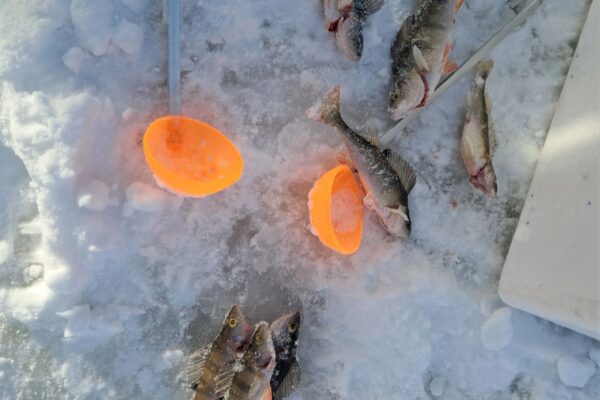
The cold did not stop people from getting outside. Many participants arrived early to join the pre-conference social activities organised by the European Citizen Science Association. Some tried ice hole fishing on the frozen Baltic Sea in the hope of catching their dinner. Others visited reindeer at Poro-Panuma Reindeer Farm. These outings were followed by relaxed drinks and a chance to catch up before the conference officially began.
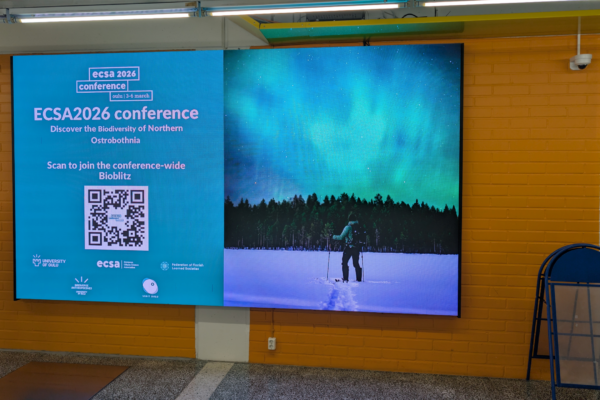


The next day, participants travelled a short distance north of the city to the University of Oulu, one of Finland’s largest research institutions. The programme featured panel discussions, round tables and workshops on topics such as engaging so-called “hard to reach” groups, inclusive health innovation, gamification in citizen science, and questions around ethics and AI readiness in the citizen science community.
After a full day of sessions, the conference opened with a welcome from the ECSA team and a keynote by Camilla Brattland and Bente Sundsvold. They spoke about their work documenting and sharing the Sámi people’s knowledge of the sea and coastal landscapes. Their talk also addressed how climate change, cultural loss and declining biodiversity are affecting the long-standing relationship between Indigenous communities and the environment.
The opening ceremony ended with an unexpected performance from Mieskuoro Huutajat, also known as the Screaming Men’s Choir. It was an extraordinary experience and not something many of us had expected.

From the university, we later travelled to Oulu City Hall, where the Mayor of Oulu, Ari Alatossava, welcomed participants to the city during its year as the European Capital of Culture. In this beautiful historic building, we ate, drank, talked and listened to performances by local accordionist Kaisa Risitluoma. The evening did not end there. A group of us continued to a local bar where old ECSA presentations were revived with a side of karaoke.
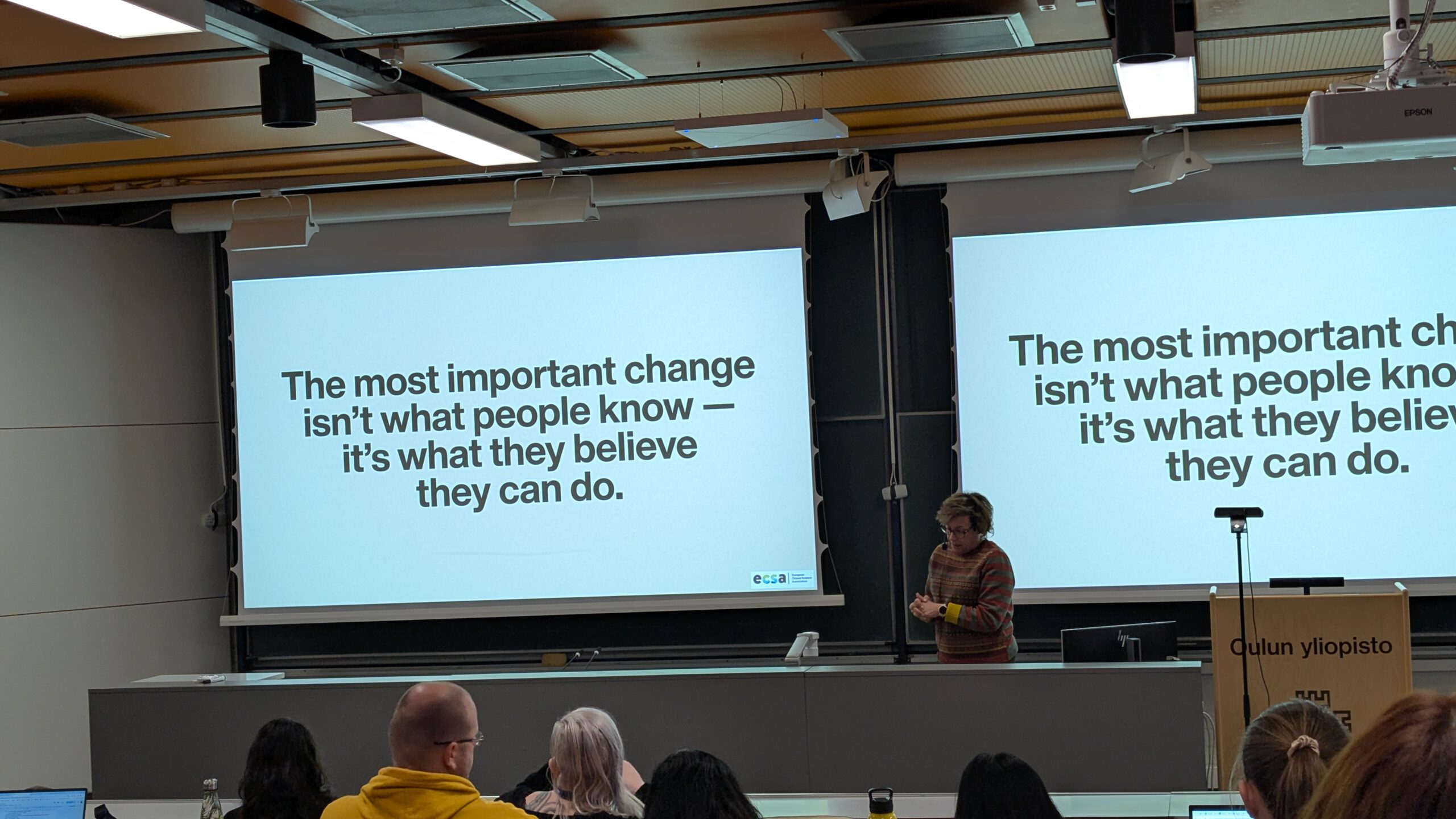
Although Tuesday had already been busy, it was only the beginning. On Wednesday, the IMPETUS team took part in the programme. Our communications officer, Chris Styles from EUSEA, was joined by policy expert Alex Albert, who, until recently, worked with Nesta and remains part of the wider IMPETUS community. Alex shared insights during the panel Transnational approaches for diversity: interconnecting and integrating citizen science and science communication ecosystems open to all. The session offered a look behind the scenes of the IMPETUS accelerator calls. We were also pleased to share the stage with colleagues from the COALESCE Hubs Network, as well as Jess Leonard from the Soil You Scalf project, and Alisa Apreleva from Neuro(Minorities)Science, participants in the third accelerator cohort.
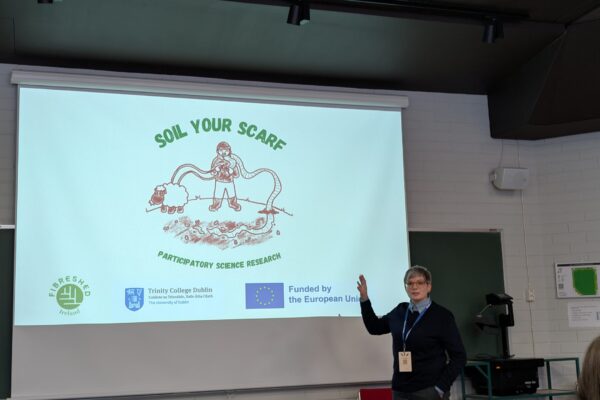

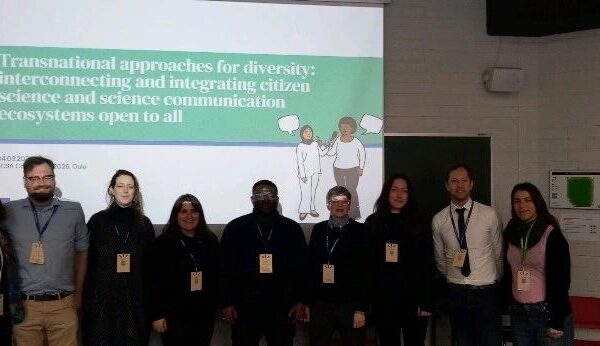
This was not the only chance to meet familiar faces from the accelerator. At the poster session, we met colleagues from the Deeptime project and Oeiras Experimenta. Snow was falling outside the windows, but the atmosphere inside was warm and welcoming.

The third day of the conference included a session led by the Science for Change team. Agostina Bianchi and Mireia Ros Martínez were joined online by Caroline Michellier from the Royal Museum for Central Africa and UCLouvain. Their session considered the ECSA 10 Principles of Citizen Science and asked how these principles might be refreshed ten years after their publication. The discussion included a case study from the IMPETUS-supported FloraAtlas project and lessons from the D-NOSES initiative.
After several days of sessions and discussions, some participants went outside to build citizen snow scientists, while others saved their energy for the conference party. The evening included good food, plenty of drinks, dancing and a fair amount of singing.

The final day had a calmer pace, with working group meetings on policy, open science and the future direction of ECSA and citizen science more broadly. The conference then came to a close, and we began looking ahead to the next gathering, which will take place in Lisbon. It will require a very different suitcase from the one needed for Finland’s winter weather. Although IMPETUS will have finished by then, we expect many of the projects supported through the accelerator to appear in the programme.


Even after the conference ended, there was one final moment to remember. As the evening fell over Oulu, the Aurora Borealis appeared overhead, providing a fitting farewell to the conference and to our time in Finland.
Thank you to ECSA for a fantastic week, and for the support in promoting the IMPETUS project over the past four years.