
Strengthening Public Engagement in Research
What if one of the most effective tools for rebuilding trust in science and democracy has been available to us all along: citizen science?
When the public helps produce the knowledge that informs policy, the effects are measurable: greater institutional transparency, stronger civic skills, and a gradual return of public trust. That matters now more than ever, as confidence in science strains under the weight of disinformation. It also speaks directly to the EU’s broader agenda, from the Green Deal to the UN’s Sustainable Development Goals.
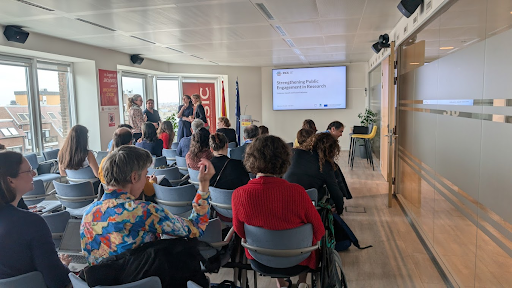
Bringing the community together
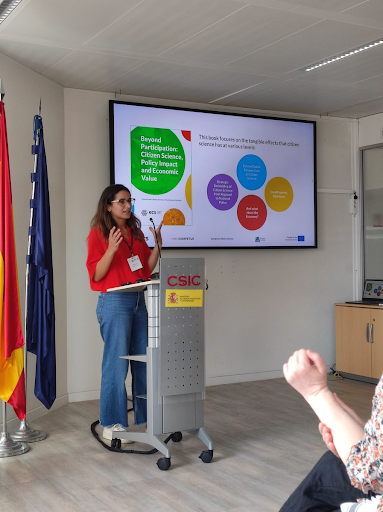
On June 4th in Brussels, three projects, European Citizen Science (ECS), IMPETUS, and RIECS-Concept, brought together a deliberately diverse group: European Commission officials, project coordinators, and representatives from institutions including the German Aerospace Center and the Royal Belgian Institute of Natural Sciences, alongside practitioners working in citizen science day to day. The aim wasn’t to preach to the converted about past achievements, but to make a substantive case that citizen science remains an underused force in research and governance.
Grounding the case in real initiatives
Rather than leading with data alone, the day leaned on storytelling. Drawing on real projects from the IMPETUS accelerator programme, the team built fictionalised scenarios spanning women’s health, biodiversity, wellbeing, air quality, and urban planning, brought to life by the ECS team through personal anecdotes that gave the material a resonance statistics alone rarely achieve.
Looking toward FP10
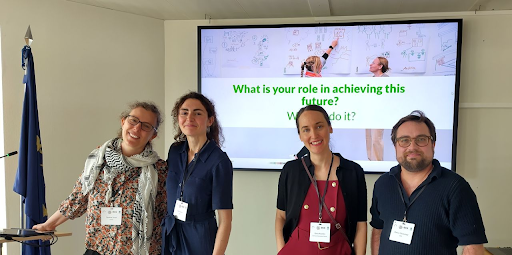
Antonella Passani and Mireia Ros then addressed the road ahead, particularly as the EU prepares FP10, the framework programme running from 2028 to 2034. Their message was direct: the evidence and tools already exist; what’s missing is the political will to scale them. This translated into three recommendations: a dedicated funding line for public engagement, mainstreaming participatory approaches across every programme pillar, and lasting research infrastructure (RIECS) built for long-term sustainability.
Our thanks to the 53 participants, the Spanish National Research Council for hosting, and the ECS team. Anyone working on public engagement, citizen science, or FP10 is warmly invited to continue the conversation.
No Project is an Island
What does it look like when years of collective effort finally come together? On June 17th, the projects European Citizen Science (ECS) and IMPETUS answered that question in a joint final event held online, drawing more than 160 registered participants from across the citizen science community.
Celebrating a shared legacy
Over the course of the event, both consortia walked the audience through their journeys and what they leave behind. IMPETUS closes with a legacy rooted in inclusion, community, and capacity building. ECS leaves the field meaningfully stronger: a well-equipped community supported by the ECS Academy, the ECS platform, and growing networks of practitioners, educators, trainers, early career researchers, ambassadors, and libraries. Together, across four years of work, both projects have helped prepare the citizen science community for a future with greater public engagement at its heart.
Looking to what comes next
Representatives from Science Comes to Town, Coalesce, REINFORCING, ECS, and IMPETUS joined a panel discussion on the future of citizen science, with structural funding emerging as a central theme. Without it, the advances built by projects like these risk remaining unrealised. The argument was familiar but no less urgent: the foundations are in place; what’s needed now is the sustained support to build on them.
A Citizen Science Antimanifesto
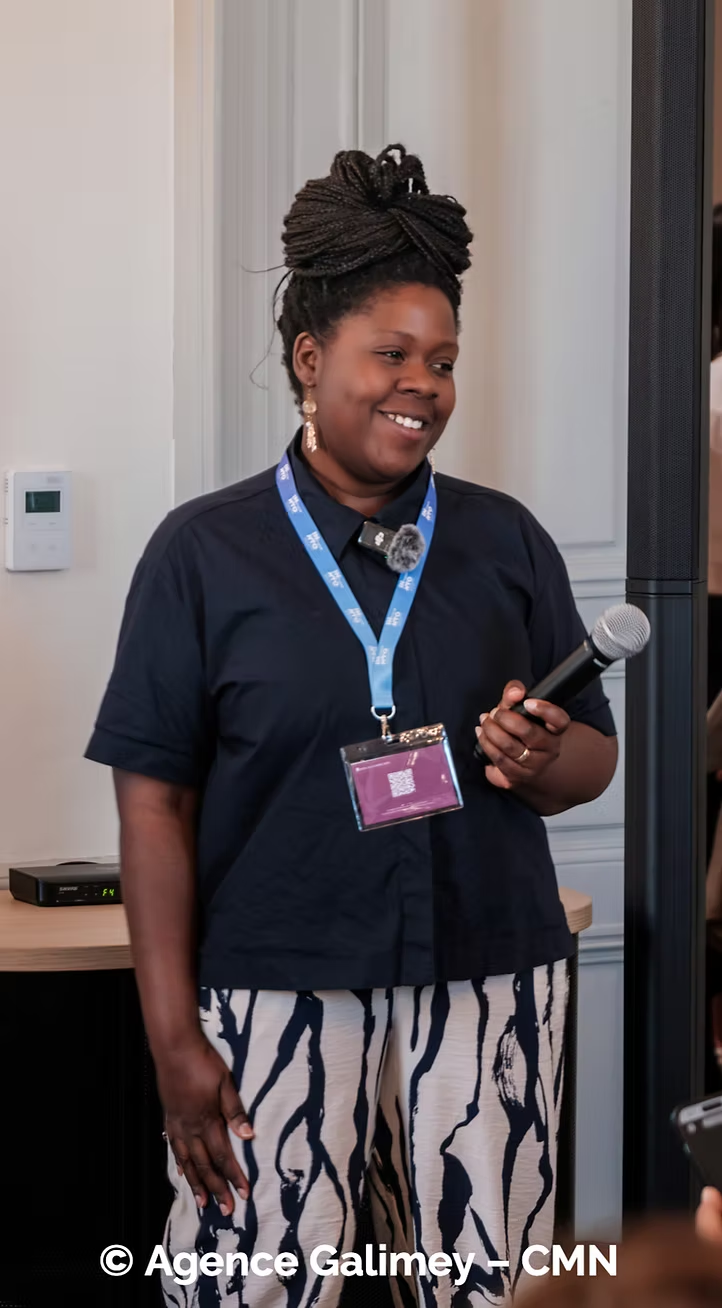
Perhaps the most memorable moment of the day came from Vanessa Mignan Jenkins, whose keynote, “The Future of Citizen Science Cannot Look Like Its Past,” posed questions on inclusion and ethics that were uncomfortable in the best possible sense. Progress, she suggested, begins with an honest reckoning with what we could be doing better.
No project is an island. What ECS, IMPETUS, and the wider community have built together is something closer to an archipelago: distinct but connected, and stronger for it. The work of shaping citizen science’s future continues, and it belongs to all of us.
IMPETUS Demo Day: A Final Showcase
The following day brought the IMPETUS Demo Day, a fitting conclusion to the Accelerator programme. Nine citizen science initiatives (CSIs) from the third cohort took to the stage to present their work, sharpen their communication skills, and respond to questions and feedback from the wider community. Adding an inventive dimension to the proceedings, audience members stepped into the roles of key stakeholders, offering the presenters a genuine sense of how different groups might engage with and respond to their work.
A deserving winner
At the close of the day, Heat Watchers In Action was announced as the winning project, a result that carried particular meaning. The project had participated in the Accelerator not once but twice, first as a kick-starting initiative in 2024, and again as a sustaining project in 2025. That arc, from early-stage idea to recognised achievement, spoke to exactly the kind of long-term development the Accelerator was designed to support.
Marking the end of an era
With the Demo Day concluded, IMPETUS reached the end of its final official event. Taken together with the joint closing event alongside ECS, it brought into focus the considerable role both programmes have played within the citizen science ecosystem: building capacity, supporting communities, and helping to shape the approaches that will carry the field forward.
The programmes may have reached their formal conclusion, but their influence on the practice and future of citizen science is far from over.